
Bottle Tree Significance
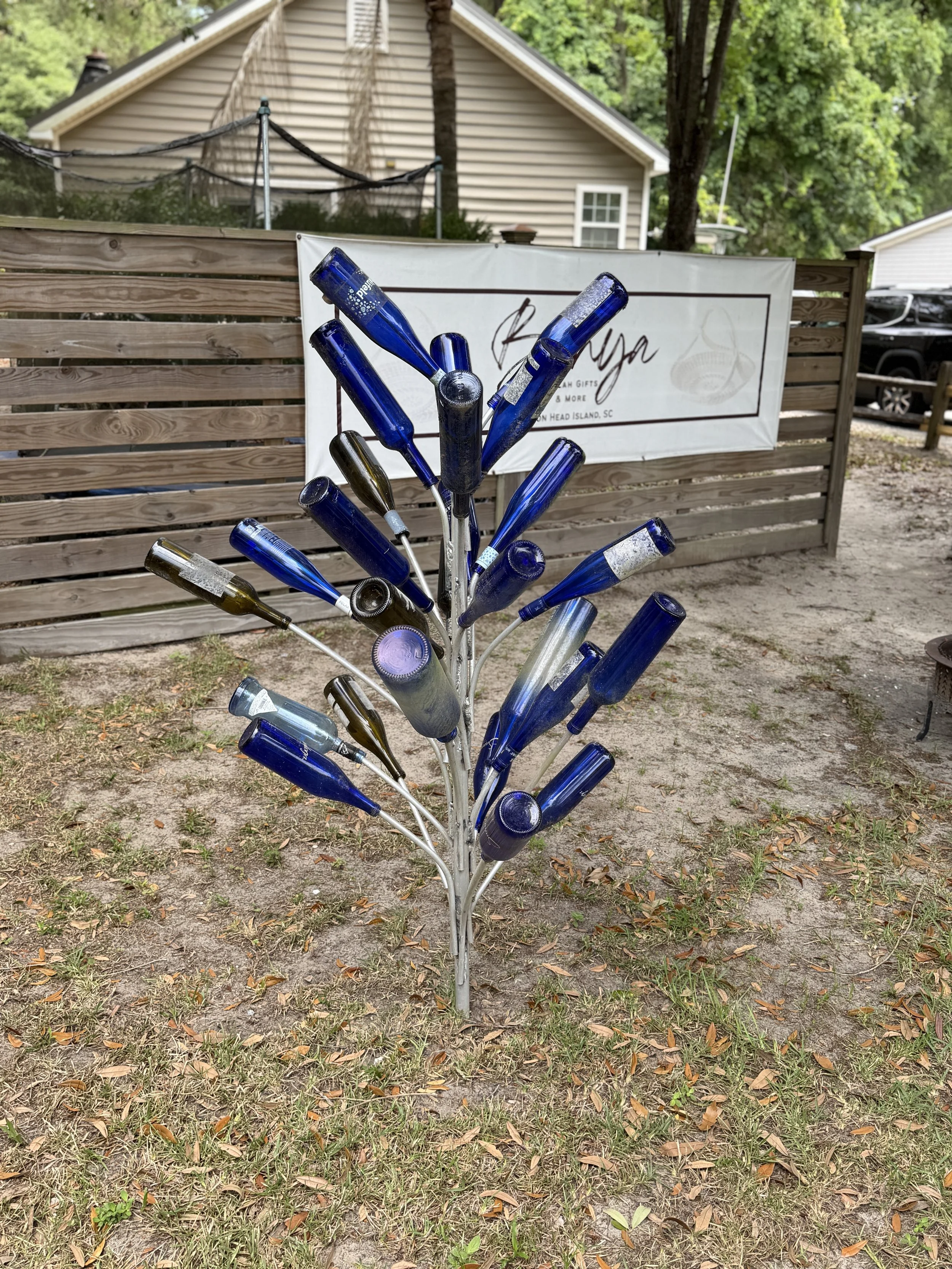
What is a Bottle Tree?
If you’ve spent any time driving along the winding, moss-draped roads of Hilton Head, Bluffton, or the surrounding Sea Islands, you’ve likely spotted an interesting blue sculpture made of bottles in someone’s front yard. At first glance it looks like a tree whose branches are tipped not with leaves, but with vibrant, colorful glass bottles—most notably, a deep, striking shade of cobalt blue. While they look like beautiful, sun-catching art pieces, these aren’t just unique garden decorations. They are Bottle Trees and carry a profound, centuries-old cultural significance rooted deeply in Gullah Geechee heritage.
The Origins: A Journey Across the Atlantic
The tradition of the bottle tree traveled to the Americas with enslaved Africans and has been meticulously preserved by the Gullah Geechee people. As you likely know, Gullah Geechee people are descendants of enslaved Africans who settled in the isolated coastal regions of South Carolina, Georgia, and Florida.
In African spiritual traditions, it was believed that wandering spirits (often called haints or bo haggas in Gullah culture) roamed the earth at night, looking to cause mischief or harm to the living. The bottle tree was created as a spiritual safeguard. These bottle trees are said to ward off evil spirits and keep you safe, some say they are meant to bring good luck.
Placement of Bottle Trees
People traditionally place bottle trees in the front yard, often near the entrance of the home or close to a gateway. The front yard acts as the first line of defense. According to Gullah lore, evil spirits are naturally curious but easily distracted. As they approach a home during the midnight hours, they are drawn to the glittering glass. Once a spirit slips inside the hollow neck of a bottle, it becomes trapped. When the morning sun rises, the intense heat of the daylight destroys the trapped spirit, leaving the home and the family safe.
Historically, these were made using dead trees or large branches (crape myrtles are a traditional favorite), but today, you’ll see them crafted from beautiful iron frameworks as well.
The Significance of the Color Blue
While you might see bottle trees with green, yellow, or clear glass, the most traditional and spiritually significant color is cobalt blue, often referred to in the Lowcountry as Haint Blue. In Gullah Geechee culture, the color blue holds immense power for two reasons:
The Illusion of Water: Spirits are believed to be unable to cross over water. The deep blue glass mimics the look of water, confusing the spirits and automatically drawing them in.
The Sacred Sky: Blue represents the sky, holy protection, and the presence of ancestors looking down from above.
The color is so powerful in local tradition that it extends beyond the garden. If you look closely at historic cottages and porches throughout the Lowcountry, you will often see porch ceilings, window frames, and doors painted in that same soft, greenish blue to keep the home sacred and protected.
A Living Piece of Lowcountry History
Today, the bottle tree is a striking symbol of resilience. It is a physical reminder of how the Gullah Geechee people preserved their heritage, adapted their traditions, and infused the Lowcountry landscape with deep spiritual meaning and beauty.
The next time you pass a bottle tree gleaming in the South Carolina sun, you aren’t just looking at a piece of yard art. You are looking at a living tradition of protection, a celebration of ancestry, and a flash of history catching the light. We’re so proud to be carrying Bottle Trees at Binya now! We have one in stock available for purchase, or you can come make your own custom Bottle Tree. Visit us in store to learn more and make yours!